


Higher-level Strategies for Computer-Aided Retrosynthesis


초록
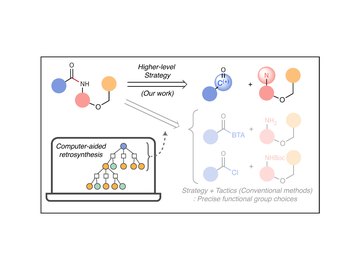
역합성(retrosynthesis)은 표적 분자를 더 쉽게 구할 수 있는 구성 요소로 단순화하는 유기화학의 핵심 기법이다. 컴퓨터 보조 합성 계획(CASP)은 직전 전구체를 재귀적으로 제안하여 다단계 합성 경로를 찾아냄으로써 이 과정을 자동화한다. 그러나 CASP는 더 긴 합성 경로가 필요하고 가능한 분해(disconnection)의 수가 많은 복잡한 분자에 대해서는 대체로 어려움을 겪는다. 여기서 우리는 컴퓨터 보조 역합성을 위한 새로운 상위 수준(higher-level) 프레임워크를 제안한다. 우리의 접근법은 표적 생성물에 나타나지 않는 경로 중간체의 세부 부분구조를 추상화하여, 알고리즘이 구체적인 작용기 선택에 대한 고려를 미루면서 상위 수준 전략에 집중하도록 함으로써 탐색 공간의 실질적인 너비와 깊이를 줄인다. 이 프레임워크는 단일 단계 역합성에서 더 높은 top-k 정확도를 달성하며, 기존 접근법보다 더 많은 표적에 대해 다단계 경로를 찾아낸다. 복잡한 의약품과 천연물에 대한 사례 연구를 통해, 우리는 이 프레임워크가 제안하는 경로가 특히 기존 접근법이 실패하는 까다로운 사례에서 전체 합성 계획을 세우는 강력한 기반이 되며, 동시에 화학자가 자신의 전문성을 활용해 합성 설계를 다듬을 수 있게 함을 보인다. 궁극적으로 상위 수준 전략에 집중하는 것은 컴퓨터 보조 역합성에서 까다로운 표적에 대한 효과적이고 직관적인 접근을 가능하게 한다.
Original abstract (English)
Retrosynthesis is a core technique in organic chemistry that simplifies target molecules into more readily available components. Computer-aided synthesis planning (CASP) automates this process by recursively proposing immediate precursors to identify multistep synthetic pathways. However, CASP typically struggles for complex molecules that require longer synthetic pathways and present a greater number of possible disconnections. Here, we introduce a new higher-level framework for computer-aided retrosynthesis. Our approach abstracts detailed substructures in pathway intermediates not appearing in the target product, allowing the algorithm to emphasize higher-level strategies while postponing the consideration of specific functional group choices, thus reducing the effective width and depth of the search space. This framework achieves higher top-k accuracy in single-step retrosynthesis and identifies multistep routes for more targets than the original approach. Through case studies on complex drugs and natural products, we demonstrate how routes proposed by our framework provide a powerful basis for developing full synthesis plans, particularly in challenging cases where the original approach fails, while enabling chemists to leverage their expertise to refine the synthesis design. Ultimately, focusing on higher-level strategies enables an effective and intuitive approach for challenging targets in computer-aided retrosynthesis.